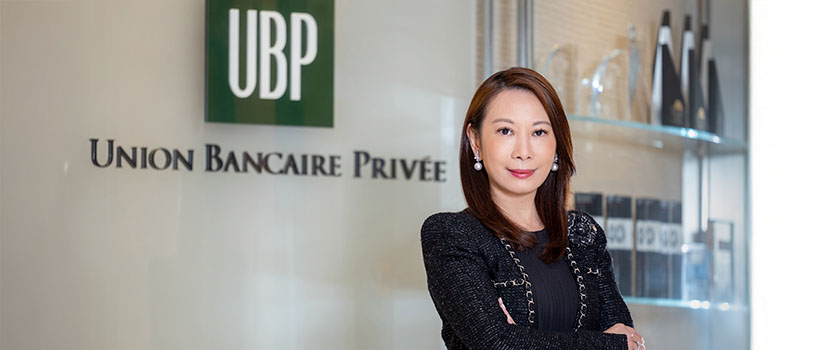
Union Bancaire Privée (UBP) more than doubled its net new money (NNM) in North Asia for 2025 while capturing surging brokerage and wealth planning revenues, North Asia region head and Hong Kong CEO Teresa Lee told Asian Private Banker.
Revenue for the North Asia business grew nearly 15% yoy in Swiss franc terms, driven by brokerage fees — which accounted for roughly a third of the 2025 revenue mix amid a favourable capital market — and accompanied by a fivefold increase in wealth planning solutions revenue compared to the previous year. Asset inflows for the year were split evenly between top-ups from existing accounts and new client acquisitions, Lee explained.
“Since joining UBP in August 2024, I have focused on strengthening our talent base and elevating performance standards to align with the bank’s strategic priorities and prepare for the next stage of growth,” Lee said.
An initial evaluation of team dynamics prompted strategic personnel changes across the front, middle, and back offices to align talent with sustainable growth, according to Lee. She also appointed heads of business risk management and risk to elevate compliance and suitability frameworks.
“Since joining UBP in August 2024, I have focused on strengthening our talent base and elevating performance standards.”
UBP had Asia (ex-China onshore) AUM of US$24 billion as of the end of 2025, growing 22.7% from US$19.9 billion in 2024, according to data from APB‘s 2025 AUM League Table.
Greater China business development
Greater China served as the primary growth engine, accounting for 90% of NNM. During the period, UBP saw a nearly 50% yoy increase in new account openings, per Lee.
This momentum was supported, in part, by groundwork laid a year prior with the appointment of a head of business development for Greater China in 2024, who has since been specifically tasked with expanding the bank’s regional market footprint.
Unlike traditional private bankers, this role focuses on coordinating partnerships with onshore professional associations in China, including external service providers, family offices, and industry bodies, to enhance UBP’s brand visibility and cross-border institutional connectivity across the North Asia market.
The dedicated Greater China business development role reflects UBP’s view that the market’s growth potential justifies deeper cross-border business engagement.
The Swiss pure-play, which targets mainland Chinese clients’ offshore assets, believes one of its differentiators in the China market is its onshore asset management team and QDLP (Qualified Domestic Limited Partnership) capabilities.
As one of the foreign banks with renewed QDLP quotas, which are held by the bank’s two licensed onshore entities, UBP enables clients with onshore funds to invest in both local strategies and regulator-approved offshore products, such as UBP’s flagship fixed income strategies.
The firm is now evaluating further regional engagement opportunities in Beijing and Chengdu. Shanghai and its neighbouring cities remain the core focus, while the Greater Bay Area is considered a “critical growth engine.”
“Our continued focus on Shanghai is very intentional. We already have a strong asset management presence in the city, with established capabilities, on-the-ground expertise, and a well-developed network,” Lee said, adding she works closely with the Shanghai team to leverage onshore and offshore capabilities to better serve Greater China clients across both markets.
In Chengdu, Lee aims to utilise a partnership with a Hong Kong-based multi-family office that has recently established a local presence. By collaborating on bespoke events, the firm aims to connect with local entrepreneurs and business owners and grow its regional brand presence in these key cities.
“However, I don’t want to dilute our efforts across too many cities in China, which will be less efficient unless at the point of time I have a larger team and more bankers dedicated to China,” she added.
Meanwhile, UBP is in talks with some of the non-bank financial institutions, including brokerage, securities, and asset management firms in Shanghai, for potential collaborations. “They do not have offshore capability, but they have a very rich client pool in China, who have offshore assets and are looking for diversification,” she explained.
EAM dealing team build-out
In addition, Lee is leaning into the EAM business as “a second growth driver.” In late 2025, the bank launched a dedicated EAM dealing team for its Hong Kong and Singapore desks.
The build-out included the hiring of Mark Ruddock as head of EAM dealing Asia in September 2025, followed by the additions of Christabel Touil and Daouda Kasse in October.
“We have always offered EAM services, but my focus is on enhancing team support and capacity. My priority is to strengthen governance, controls, and the risk framework across our EAM offerings,” she said.
While the bank encourages bankers to refer qualified EAM relationships to the EAM team, on the marketing front, day-to-day activities from onboarding to execution will remain within the EAM team, according to Lee.
“Capturing new assets and new client acquisition will remain my core focus.”
Looking ahead to the rest of 2026, Lee was optimistic. “Capturing new assets and new client acquisition will remain my core focus,” she said.
“We are also excited to see that in the first quarter of this year, we continued the same strong momentum in wealth planning,” she added, noting that these growth areas — alongside recurring income from managed solutions — will continue to diversify the bank’s regional revenue streams.