The capture of Nicolás Maduro in a US-led operation has seized global attention. Washington has signalled its intention to oversee a transitional phase towards a new governing framework, while hinting at potential involvement by US energy companies in rebuilding Venezuela’s oil infrastructure. Beyond the headlines, what could this mean for the energy, oil and other resources markets, Venezuela’s sovereign debt, and geopolitics more broadly? Our experts delve into the implications.
Recent developments and initial assessment
Recent events in Latin America have marked a significant political shift, following the US-led military operation in Venezuela that resulted in the capture of Nicolás Maduro. The US administration has announced its intention to oversee a transition period aimed at establishing a new governing framework, alongside statements indicating potential involvement of US energy companies in rehabilitating Venezuela’s oil infrastructure.
From an energy market perspective, these developments are unlikely to have a meaningful short-term impact. Venezuela currently exports approximately 800,000–900,000 barrels of crude oil per day (less than 1% of global supply), and years of underinvestment and operational decline mean that any material increase in production would require substantial capital and time – likely at least 18 months. As a result, the likelihood of immediate changes to global oil supply dynamics appears limited.
That said, the events raise broader questions regarding state involvement in resource development and access, particularly in the context of geopolitical competition. While near-term market impacts are modest, longer-term implications for global resource policy warrant close attention.
Limited oil and energy market effects
Oil and energy prices have edged lower following last weekend’s events in Venezuela, with crude oil trading at levels of around USD 60 per barrel. The decline in prices was by no means significant, and there are good reasons for this lack of price volatility. The oil market continues to demonstrate a significant supply overhang, with a daily production surplus of around 1.4 million barrels per day expected in Q1. There are likely to be modest upside risks to daily surpluses, meaning that global supplies should remain abundant in the first half of the year. The upshot of this is that despite an apparent rise in geopolitical tensions, there is no reason for prices to show increasing volatility in the near term. We maintain our expectation of Brent crude prices trading at levels of around USD 60 per barrel during the first half of the year, though we see modest downside risks.
Venezuelan oil exports have stagnated following years of sanctions, and it will take a prolonged period of investment to increase production in any material sense. This means that there is no immediate prospect of a large increase in Venezuelan exports. On the margins, the events of last weekend should be highly beneficial for Guyana’s oil exports, because it removes any latent risk of Venezuelan intervention, which had been a concern during Maduro’s time.
In terms of corporate exposure, firms already operating in Venezuela or holding outstanding receivables – such as US integrated oil majors, US refiners capable of processing heavy crude, and US oilfield service companies, whose technology, expertise and equipment is needed to unlock production – appear the best positioned to benefit over the medium term, should conditions allow renewed investment.
Resource nationalism
Trump’s pivot towards explicit control of Venezuela’s natural resources highlights an emerging trend of resource nationalism. Countries with the means at their disposal, such as the US, are likely to engage in further measures of this kind. This is already apparent with Trump’s recent comments regarding acquiring Greenland for ‘national security purposes’.
We note that the US and China have taken several steps to safeguard their access to critical and essential metals. China already imposes export curbs on rare earth metals, and the US has moved to increase its stockpiles of a wide range of metals. These measures are unlikely to be relaxed anytime soon, and it means that the tightness seen in several physical markets – such as copper, silver and the platinum group metals (PGM) complex – is unlikely to end any time soon. While high prices may result in some demand destruction, we do not anticipate any material supply responses given limited capex and associated time lags.
Beyond Venezuela, concerns extend to the broader Latin American region, which plays a critical role in global commodity supply. While Venezuela itself has no significant mining industry as such, it holds considerable potential for gold mining. Chile and Peru are the two top copper-producing nations in the world and Brazil is a major exporter of iron ore and soft commodities. Latin America is also a major gold mining region, and its biggest client for commodity exports is China. Supply chains, consumers and countries are set to be increasingly wary of certainty of access to key minerals.
The upshot of this is that investors should remain prepared for the possibility of sudden price spikes across the base, industrial, and PGM metals groups.
Sovereign debt restructuring outlook
Venezuela and its state-owned oil company, PDVSA, defaulted in 2017 after years of economic contraction, falling oil production, and international sanctions, with unpaid interest, legal claims, and arbitration awards substantially increasing the country’s external liabilities. Current estimates indicate around USD 60 billion in defaulted bonds, while total external obligations – including unpaid interest, bilateral loans, and arbitration-related claims – may amount to USD 150–170 billion, though precise figures are uncertain due to limited disclosure and trading restrictions. The creditor base is diverse, comprising international bondholders, distressed-debt investors, arbitration claimants such as ConocoPhillips and Crystallex, and bilateral lenders, notably China and Russia, with US court rulings allowing some creditors to pursue Venezuelan assets abroad.
Despite this complex and fragmented debt structure, Venezuelan sovereign and PDVSA bonds almost doubled in price during 2025 and have continued to strengthen following recent political developments, with sovereign bonds trading in the low 40s and PDVSA bonds in the high 30s, compared with 10–15 one year ago.
Sanctions on oil exports remain in place, but investors anticipate a gradual easing through formal recognition of a new Venezuelan administration and expanded licensing. A credible political transition could help restore institutional confidence and enable renewed foreign investment, supporting a gradual recovery in oil production boosting cash flow and, over time, creating conditions for comprehensive debt restructuring. Nevertheless, bond valuation remains highly uncertain and sensitive to assumptions around political stability, election timing, production recovery, policy continuity, and creditor treatment. In the near term, bond prices may continue to be driven by optimism, though elevated volatility is likely to persist.
Precedent and strategic signalling beyond Venezuela
The events in Venezuela also signal a broader willingness on the part of the US to pursue strategic objectives tied to resource access and geopolitical alignment. This raises questions about potential future pressure points globally, particularly in countries that combine some or all of the following features: valuable resources, strained relations with Washington, and limited military deterrence. Iran, Cuba and Greenland were recently cited in this context, though each presents distinct political, economic, and security dynamics.
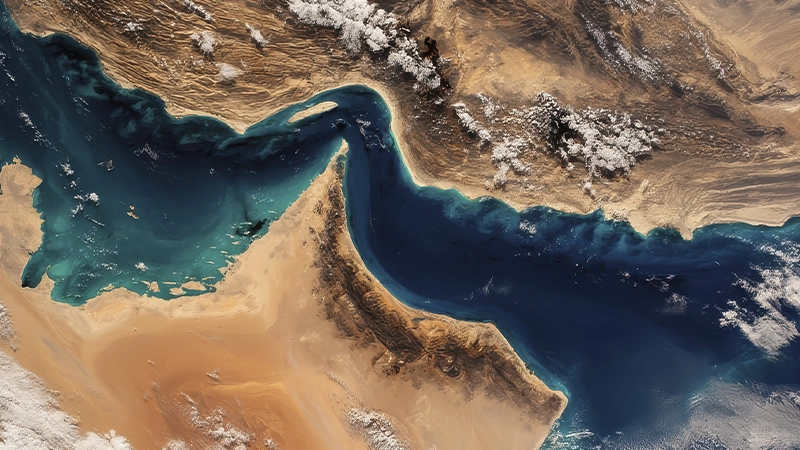
Iran remains a potential source of elevated geopolitical risk due to its strategic energy resources, ongoing economic stress, and strained relations with the United States. Prolonged sanctions have constrained growth, weakened the currency, and limited access to international markets, contributing to domestic unrest. Recent signals from US leadership indicate a willingness to intensify pressure, should domestic instability escalate, raising the risk of further sanctions or targeted actions. Any material escalation would have implications for regional security and energy markets, given Iran’s importance to the global oil supply and key shipping routes.
Cuba’s outlook has become more uncertain following the political change in Venezuela, which for decades served as a primary source of subsidised oil and economic support. Disruptions to this relationship risk worsening fuel shortages, electricity constraints, and broader economic fragility. Policymakers in Washington may judge that economic pressure alone could drive change over time, increasing downside risks to Cuba’s near-term economic stability without direct intervention.
Greenland has a significant strategic relevance to the US due to its Arctic location, security significance, and long-term mineral potential. Its geography is increasingly important for missile defence, emerging shipping routes, and access to critical resources. While development of its mineral assets is constrained by environmental and infrastructure challenges, US interest in expanding its military presence and securing resource access has intensified. Any unilateral action would carry significant diplomatic and NATO alliance risks, underscoring Greenland’s sensitivity as a strategic and geopolitical asset.
Final thoughts
Recent developments underscore a broader shift towards greater geopolitical assertiveness centred on resource security, strategic geography, and political alignment. While the immediate market impact remains limited, the cases of Iran, Cuba, and Greenland highlight how economic pressure, energy dependence, and strategic assets are increasingly shaping policy decisions and risk assessments. For investors and policymakers, this environment calls for heightened attention to geopolitical tail risks, supply chain resilience challenges, and alliance dynamics.
Download our UBP Headlines
The opinions expressed herein are correct as at 08 January 2026 and are subject to change without notice. Any forecast, projection or target, where provided, is indicative only and is not guaranteed in any way.