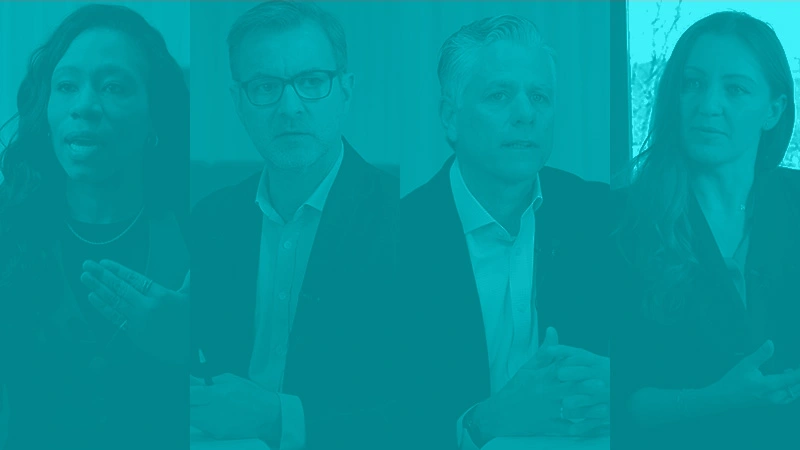
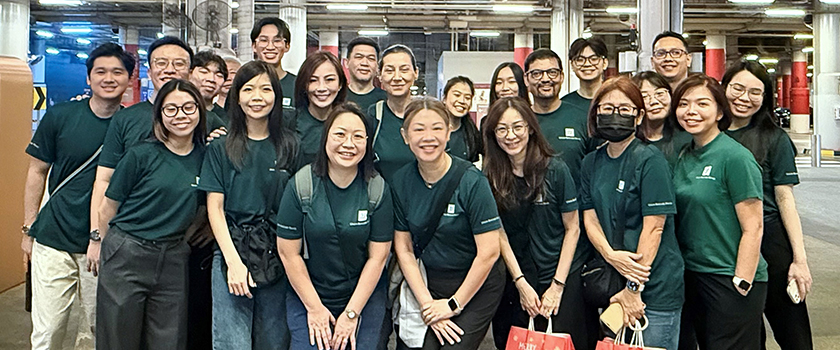
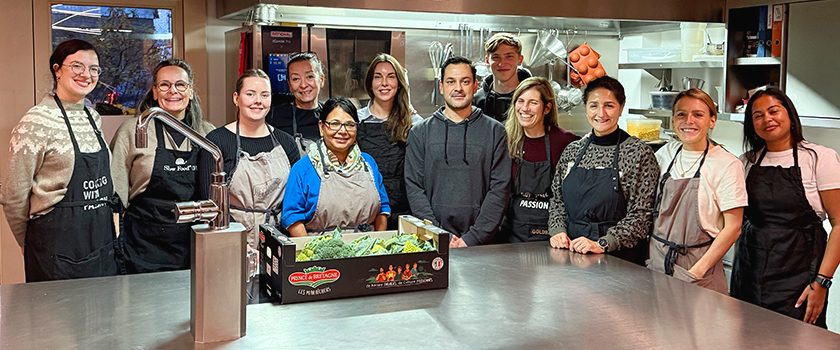
On 8 March 2026, colleagues across our global offices reflect on this year’s International Women’s Day theme, ‘Give to Gain’, and what it means in practice.
International Women’s Day, celebrated each year on 8 March, highlights the progress made towards gender equality while recognising the work still to be done. The 2026 theme, ‘Give to Gain’, invites individuals and organisations to consider how supporting others can create lasting impact – not only for women, but for society as a whole.
Across Geneva, Zurich, Asia, and the UK, colleagues at UBP shared how they use their voices, what they would tell the next generation, and why giving back matters to them personally.
Using our voices to shape opportunity
Advocacy takes many forms. For some, it is visible and structured; for others, it is embedded in daily leadership.
Li Hua Lee, based in Singapore, has long been active in building networks that support women’s advancement. As President of the Singapore Women’s Association for the past ten years, she has worked closely with the Singapore Council of Women’s Organisations and other groups to amplify collective voices.
‘Through organising events, workshops, and outreach programmes, I work to create opportunities for women to connect, share their experiences, and empower each other in their personal and professional journeys,’ she explains.
In Geneva, Charlotte Dewynter speaks about participation and principle. ‘I participate as often as possible in events and forums promoting women’s development, women’s careers, female leadership, and girls’ education,’ she says. ‘Giving time to share my experience, sponsoring women, and promoting gender equality is important to me.’
Giving time to share my experience, sponsoring women, and promoting gender equality is important to me.
In Hong Kong, Jackie Pang describes her advocacy as grounded in example. As Chairperson of UBP Hong Kong’s Philanthropy initiative for nearly two decades, Jackie has been closely involved in promoting domestic harmony by supporting women facing extraordinary challenges. A significant part of this work focuses on creating spaces of respite and support for low-income families who are raising children with disabilities. By helping provide resources, community, and moments of relief, these initiatives seek to empower parents who shoulder immense responsibilities and to strengthen the foundations of family life in difficult circumstances.
In the UK, Lilian Simerly highlights the importance of creating spaces where women feel confident to contribute. ‘UBP has empowered me to use my voice to advocate for women’s advancement,’ she says. Through women-focused groups that meet quarterly, colleagues discuss challenges, share experiences, and develop solutions together. ‘When organisations create the right conditions, voices are not only heard, they flourish.’
UBP has empowered me to use my voice to advocate for women’s advancement.
In Zurich, Eloana Malou emphasises the everyday dimension of advocacy: ‘I use my voice by mentoring women around me, challenging biases, and demonstrating every day what women are capable of.’
Together, these perspectives show that giving can mean mentoring, sponsoring, modelling leadership, building networks, or simply ensuring that opportunities are accessible.
Building networks, resilience, and connection
When asked what advice they would offer the next generation, a consistent theme emerges: to uplift each other.
‘Seek mentors who inspire you and be willing to mentor others,’ says Li Hua Lee. ‘Collaborate across differences – connecting with women from various backgrounds can lead to innovative solutions and create lasting change. Remember, your voice matters; use it boldly to advocate for yourself and your community.’
Charlotte Dewynter echoes the importance of solidarity. ‘Avoid feeling isolated,’ she advises. ‘Join groups, share expertise, and find mentors or sponsors – female or male. Sorority is a gift. Including and convincing men in these connections is key to building a more inclusive world.’
For Jackie Pang, the message is deeply personal. As a mother of two teenage daughters, she has consistently encouraged them to believe there are no limitations on what they can pursue. ‘Their starting point should never be self-doubt,’ she says. While acknowledging that the world can still be tougher for women, she frames that reality as a call for resilience and mutual support. ‘If the next generation can combine self-belief with solidarity, supporting one another across cultures and borders, they will create a more interconnected world than the one we inherited.’
Lilian Simerly advises young women not to underestimate their perspective. ‘Build meaningful connections rather than focusing on internal competition. Collaboration, not comparison, drives lasting progress.’
Eloana Malou offers similarly grounded guidance: ‘Believe in yourself, build strong networks, embrace learning, and support not only other women but everybody around you who wants the support. Surround yourself with people who lift you up.’
Believe in yourself, build strong networks, embrace learning, and support not only other women but everybody around you who wants the support. Surround yourself with people who lift you up.
Across regions and backgrounds, the message is consistent: progress is rarely achieved alone.
Giving back as a shared commitment
Beyond individual actions and advice, a common reflection emerges around what ‘Give to Gain’ represents. Several colleagues speak of gratitude for the women who supported them earlier in their careers, and of a desire to perpetuate that support. Giving back, for them, is not transactional; it is a way of strengthening communities and broadening perspectives.
As Li Hua Lee notes, giving back ‘fosters a sense of purpose and fulfilment’ while enhancing empathy and understanding. Lilian Simerly reflects that ‘true success is not only about how far we go, but how many others we bring with us.’ Charlotte Dewynter points to the importance of creating environments in which women can feel legitimate and confident, supported by their communities and organisations.
Across these perspectives, giving is seen as both responsibility and opportunity: a way to ensure that progress continues and that potential is recognised.
International Women’s Day is a moment to reflect, but also to act. The theme ‘Give to Gain’ underscores a simple principle: when individuals invest time, mentorship, and opportunity in others, the benefits extend well beyond the immediate moment.
Across UBP’s offices, colleagues demonstrate that giving – whether through leadership, advocacy, mentoring, community engagement, or example – can create pathways for others. In doing so, they contribute not only to individual advancement, but to a more connected and resilient professional community. It is an expression of the drive that defines how we support one another and, ultimately, the drive you demand.