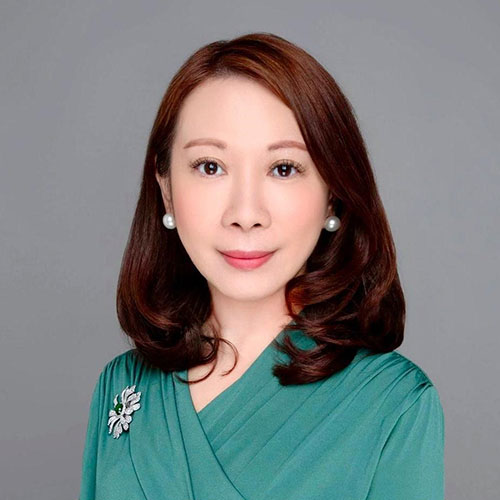
The North Asia head shares her journey of transitioning from closing deals to empowering others through intentional, empathetic leadership.
What was the most unexpected twist in your career?
Transitioning from a results-driven, numbers-focused role into leadership.
I used to define my value by the deals I closed, but I realised that true impact comes from how you empower others. I learned to lead with empathy, to speak with intention, and to prioritise building a legacy over just hitting targets.
Real success isn’t just about what you achieve - it’s about how you inspire others to do the same.
Real success isn’t just about what you achieve - it’s about how you inspire others to do the same.
What was your best financial decision?
Developing the discipline of long-term planning, living within my means and investing consistently.
It wasn’t one single move, but a foundation that gave me the freedom to take on bigger responsibilities and opportunities as my career progressed. Good financial decisions compound and starting early is what buys you options.
Investing in myself: Whether through education or professional development, these investments don’t sit on a balance sheet, but they deliver the highest returns by opening doors to higher-level contributions.
Prioritising my loved ones: The most meaningful decision I’ve made is ensuring stability for my mom after my dad passed away. Financial planning, at its core, is making sure the people we care about feel secure.
Calculated risks: Growth requires stepping outside your comfort zone. Good leaders don’t avoid risk; they manage it thoughtfully and use it as a tool for growth.
In informal networking, what challenges arise for women, and how do you turn them into opportunities?
Networking in male-dominated spaces can be tricky. I’ve definitely experienced those challenges firsthand. Early on, I realized that the key is to show up with confidence and stay authentic to who you are.
There were moments of doubt and discomfort, but I began to see those situations as opportunities to challenge stereotypes, and demonstrate my value.
Rather than viewing these environments as barriers, I see them as an advantage. They allow others to see beyond your job title and recognise your curiosity, and leadership style. By being present and approached, you not only open doors for yourself but also for the women who will follow in our footsteps.
It’s about being intentional: asking thoughtful questions, showing up confidently and being clear about the unique value you bring to the table.
Write a short letter to your retirement self. What legacy do you hope to leave?
Dear future me,
As you look back on your journey, I hope you feel proud of the legacy you’ve built -through your achievements, the relationships you nurtured and the values you upheld in every role you played.
As a daughter, I hope you brought comfort, dignity and joy to your dearest mom and dad, showing them that love through presence, patience, and responsibility.
As a wife, I hope you built a partnership grounded in respect, trust, and laughter where both of you grew individually and together, supporting each other’s dreams without losing yourselves.
As a leader, I hope your legacy is measured by the people who thrived because you believed in them, leading with both clarity and compassion.
As a friend, I hope you nurtured connections that felt like a chosen family.
I hope your actions always reflected grace and that you simply chose to do what was right, even when no one was watching.
What recent self-investment is paying off?
A lifelong commitment to building and nurturing meaningful relationships. Genuine connections are an invaluable, intangible asset that grows and deepens with time.
Through these relationships, I’ve built a network that allowed me to view the world through diverse perspectives, opening doors, and creating business opportunities that no technical skill alone could ever achieve.
The true return on this investment isn’t measured in numbers. It’s reflected in the trust and shared successes that come from surrounding myself with people who inspire, challenge, and elevate me.
Share an example of how you’ve helped a female client approach wealth and legacy uniquely.
Many extraordinary female entrepreneurs, particularly in the Greater Bay Area, are so focused on growing their businesses that wealth management and legacy planning often take a backseat. I worked with one entrepreneur who was fully immersed in her business but wanted to ensure her wealth was growing sustainably.
We worked with her to prioritize growth-oriented assets and encouraged her to diversify her investments beyond her own business sector early on to mitigate risk.
We helped her design a multi-stage wealth management and legacy plan that ensured a smooth intergenerational transfer while remaining adaptable as her priorities evolved.
By starting the planning process early, you create room to adjust strategies and minimise risks, providing the peace of mind to focus on a business while feeling confident about the family’s future.