We have just published our 2025 Sustainability Report, which gives a clear view of our sustainability vision and approach, a detailed description of our progress, and a glimpse of what lies ahead for us.
The report covers both investments and our operations, and also includes a dedicated report on climate-related risks and opportunities in accordance with the recommendations of the Task Force on Climate-related Financial Disclosures (TCFD).
Sustainability is undoubtedly facing headwinds in today’s geopolitical climate, but our conviction stands firm: responsible practices are essential for our long-term success, as environmental and social challenges create new risks and opportunities for businesses and investors.
“Our responsibility as an asset and wealth manager is to adapt, to remain pragmatic and disciplined, and to focus on our constant goal: resilience and long-term value creation for our clients.”
Guy de Picciotto, Chief Executive Officer
Responsible investing
For us, responsible investing is about practical risk management, opportunity capture and meeting our clients’ objectives – both now and in the long term. This is why we remain focused on structural shifts that align resilience with long-term value creation and have in recent years invested deliberately in the capabilities needed to navigate the changing investment landscape, strengthening our sustainability data, tools, frameworks, expertise and product offering.
Last year, responsibly managed assets – meaning those that actively promote environmental and social characteristics while taking ESG risks into account – continued to see a steady increase: by the end of 2025, they reached CHF 27.7 billion, up from CHF 24.2 billion last year.
Stewardship continued to play an important role in the investment processes of our Asset Management division. Last year, we engaged directly with 125 companies through 225 interactions in addition to joining collaborative engagement activities.
In an effort to enhance transparency, we have also developed new sustainability risk indicators for our private clients’ portfolio statements, while internal training sessions and meetings have taken place to strengthen our investment professionals’ sustainability knowledge.
Emissions reduction measures show success
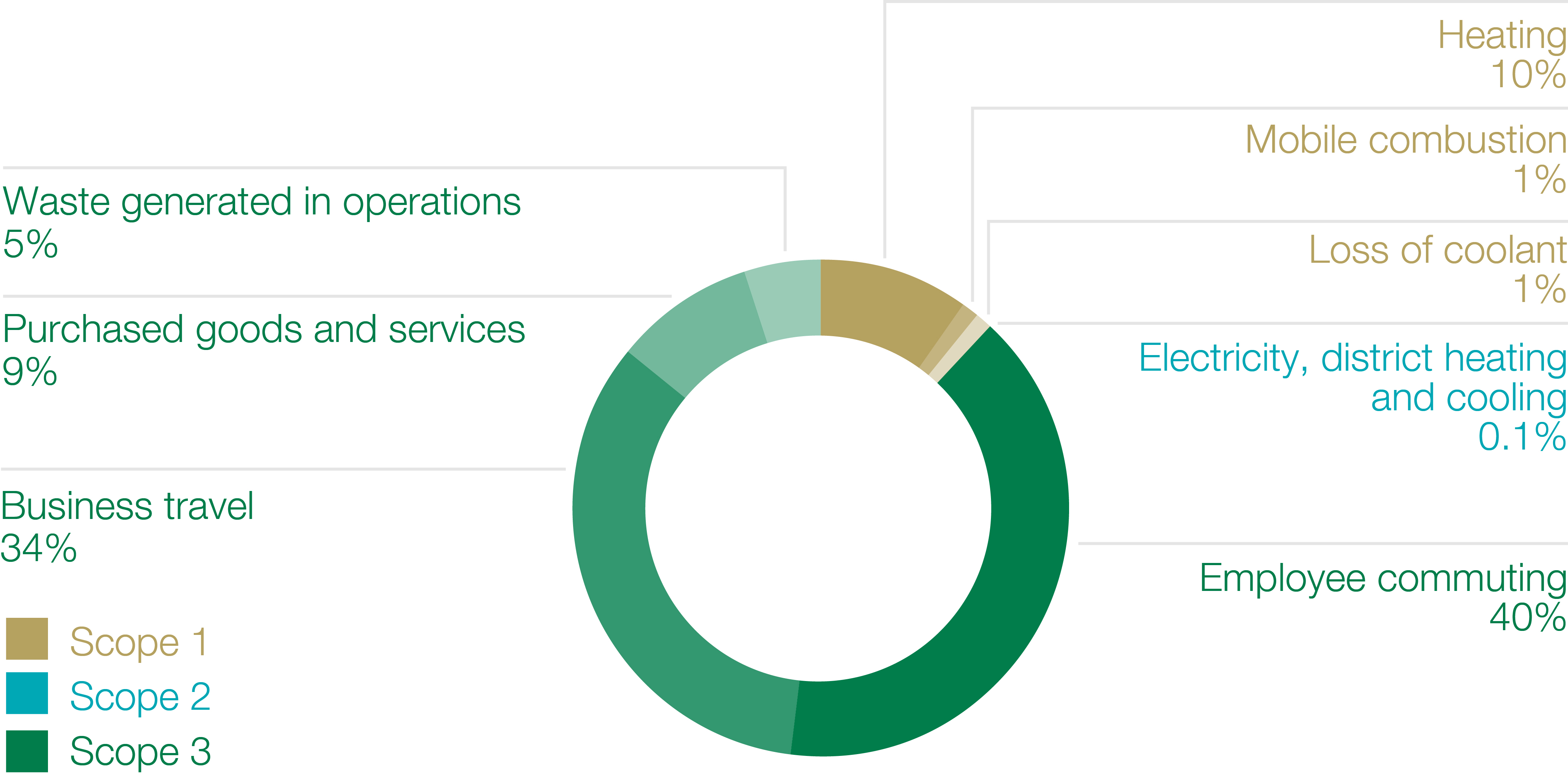
While continued growth and our latest acquisitions have caused total greenhouse gas (GHG) emissions from our operations to increase by 21% from last year, our operational carbon footprint remained 12% below our 2019 baseline. This is the result of a range of ongoing emissions reduction measures we implemented in an effort to continuously lower our operational emissions, including moving to biogas in our local heating mix, purchasing renewable electricity, rolling out LED lighting in more offices, and other energy-efficiency measures. The effects of the measures become even more visible when looking at our total GHG emissions per full-time employee ratio, which decreased by 43% from our 2019 baseline.
While we strive to achieve ongoing reductions in our carbon footprint, emissions from business travel and employee commuting are proving more difficult to tackle given our nature as a client-centric business. We have therefore continued to offset our remaining emissions at Group level, further upgrading our portfolio to align it more closely with our strategic priorities.
Share of GHG emissions by source
Giving back
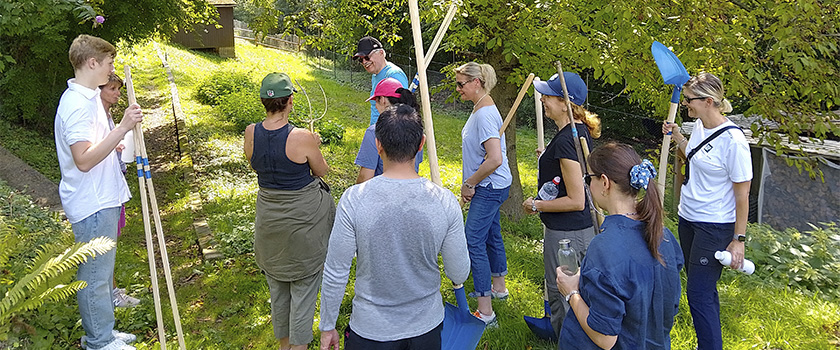
Our employee volunteering initiatives continued to be successful, with some 40 events taking place across our locations in 2025, including charity sports events, nature conservation activities, and meal preparation and distribution. On several occasions, colleagues also generously donated clothes, toys, books and other items to people in need. UBP continued several existing sponsorship schemes and added new ones that support a wide range of cultural institutions and charities.
As in previous years, we have also organised a number of well-being initiatives for our employees, recognising that their health and happiness are integral to our success. These included a series of well-being talks on crucial health-related topics
We invite you to read UBP’s 2025 Sustainability Report to find out more.



.webp)