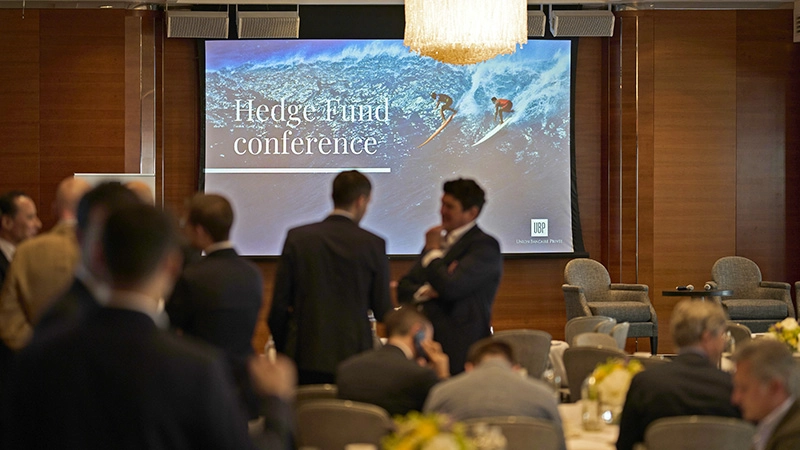
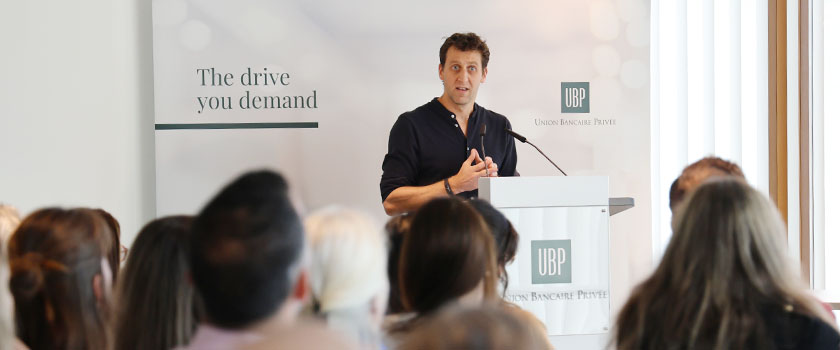
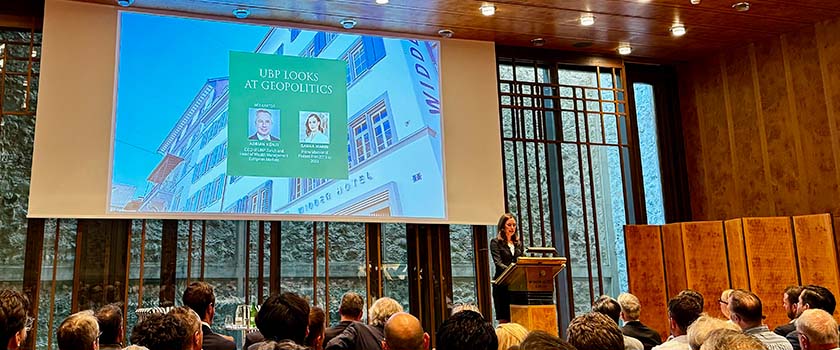
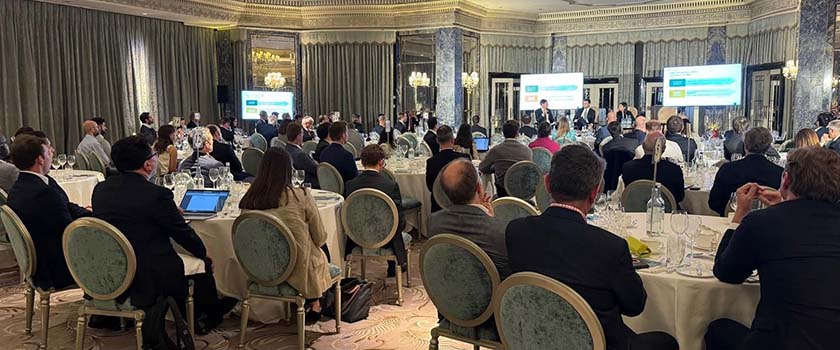
With a Code of Conduct, the Swiss Single Family Office Association aims to establish common standards. At an event hosted by Union Bancaire Privée (UBP) and finews in Zurich, representatives of family offices and the financial sector discussed what the code means in practice and why the requirements placed on single family offices are increasing.
The approximately 300 single family offices (SFOs) in Switzerland hold or manage an estimated total of around 785 billion Swiss francs. Nevertheless, they operate largely outside the public eye.
At the same time, their structures are becoming more complex: regulatory requirements are increasing, assets are becoming more international, succession issues are becoming more demanding, and expectations regarding governance and risk management are rising.
Against this backdrop, the new Code of Conduct – being issued for the first time this autumn by the Swiss Single Family Office Association (SFOA) – was the focus of a joint event held by UBP and finews in Zurich.
The panel included Dr. Kurt Moosmann, President of the Swiss Single Family Office Association; Carl Wieandt, representing a single family office; and Monica Espinosa, Head of Family Office Solutions at UBP. The discussion was moderated by Dominik Buholzer, CEO and Editor-in-Chief of finews.
Greater Professionalism Without Sacrificing Independence
The Code of Conduct represents another step toward the professionalization of Switzerland’s family-office sector. The focus is on governance, responsibilities, and the standards that professionally managed single family offices can use as a guide.
The discussion made clear that single family offices can hardly be captured through a single, uniform approach. Their structures differ considerably depending on the size of the assets, the number of family members, the generational structure, the asset classes involved, and their international orientation.
This is precisely where one of the key challenges lies: a Code of Conduct must provide guidance without imposing overly restrictive rules on families with very different needs.
A Code of Conduct must provide guidance without imposing overly restrictive rules on families with very different needs.
Governance Becomes a Key Issue
Governance was therefore a central focus of the discussion. The larger and more complex a family’s wealth becomes, the more important clear decision-making processes, defined responsibilities, and effective control mechanisms become.
This applies not only to investment management. Family offices are increasingly taking on responsibilities that extend far beyond asset management—from tax and legal matters to succession planning, philanthropy, and the management of direct corporate holdings.
This also changes the requirements placed on the organization. The traditional image of a small, discreet office primarily managing a family’s liquid assets has long been inadequate for many large fortunes.
Balancing Family Interests and Professional Structures
Another challenge concerns the relationship between the owning family and professional management. Particularly during the transition from one generation to the next, differing interests, investment objectives, and risk perceptions may come into conflict.
Professional governance is not intended to prevent such conflicts. Rather, it should ensure that decisions are made transparently and that responsibilities are clearly defined.
The distinctive nature of a single family office nevertheless remains intact. Unlike a traditional financial-services provider, it is ultimately accountable exclusively to one family and its wealth. This long-term perspective can be a significant advantage, but it also requires clear rules for managing conflicts of interest and defining responsibilities.
Banks Must Redefine Their Role
The increasing professionalization of family offices is also changing their relationship with banks. Many large single family offices now possess substantial investment expertise of their own and engage with financial institutions on an equal footing.
For banks, it is therefore becoming less sufficient simply to offer individual investment products. What is increasingly required are specialized services, access to investment opportunities, financing solutions, custody services, and expertise in complex cross-border matters.
International Interest in the Swiss Model
The Swiss Single Family Office Association’s initiative is also attracting interest beyond Switzerland. International financial centers are closely observing how common standards for single family offices can be established without restricting their entrepreneurial freedom or the highly diverse structures of individual families.
This is precisely what makes such a framework distinctive: it is not intended to create additional regulation, but rather to provide guidance on governance, responsibilities, and professional standards. Given the growing importance of family offices, the question of such guiding principles is increasingly relevant to other international financial centers as well.
The Swiss Code of Conduct could therefore have an impact beyond the domestic financial center. The SFOA is positioning Switzerland within an international discussion about how the professionalization, discretion, and independence of single family offices can be reconciled.