Ahmad Chahidi, senior wealth planner at Union Bancaire Privée (UBP) Middle East, shares how conversations with families have changed, why liquidity has become a form of strategic protection and the coming generational wealth transfer across the GCC.
Geopolitical shocks have a way of collapsing timelines. Plans that families spent years putting off – the succession conversation, the liquidity review, the question of where exactly their wealth sits and under whose laws – suddenly demand answers in weeks. The recent regional conflict did just that, turning long-ignored vulnerabilities into pressing ones for many Gulf-connected families.
Yet the disruption has not dented the UAE’s standing as a wealth hub. Dubai’s DIFC recorded 1,289 family-related entities and 1,115 foundations in 2025, up 61 and 66 per cent respectively, while Henley & Partners projected the UAE would draw the world’s largest net inflow of millionaires that year. The lesson is less about whether to stay than whether the planning beneath a well-chosen base is robust enough to withstand pressure.
We spoke with Ahmad Chahidi, senior wealth planner at Union Bancaire Privée (UBP) Middle East, about how conversations with families have changed, why liquidity has become a form of strategic protection, the coming generational wealth transfer across the GCC, and the practical steps internationally mobile families should be taking now.
How have the recent conflicts changed the conversations you are having with families about wealth planning?
Few events compress time in wealth planning like a geopolitical shock. Since the conflict began, conversations with families have shifted from theoretical to very actual. Their circumstances may not have significantly changed overnight, but the disruption has exposed gaps that had long been ignored or delayed. This prompted families to have those conversations they were putting off and sparked new conversations around liquidity, diversification and succession, in particular.
The first question is jurisdictional: where is the family’s wealth held, and under what structures? Concentration in one location may be acceptable during calmer periods, but under acute geopolitical stress, it can become a significant planning vulnerability. The recent situation has also tested liquidity, banking access, contingency plans and families’ ability to move capital across borders. For Gulf-connected families, these questions are no longer abstract and need to be actively addressed.
Have you seen families reconsidering the UAE as a base for their wealth or residency?
Few families have paused relocation decisions, reviewed banking arrangements and tested contingency plans. These were rational responses to a rapidly changing environment. However, short-term risk mitigation should not be confused with long-term relocation. Location decisions are ultimately driven by fiscal policy, regulatory clarity and the depth of the financial ecosystem, and the safety and stability of the environment you live in. A brief recalibration in sentiment does not amount to a structural reversal.
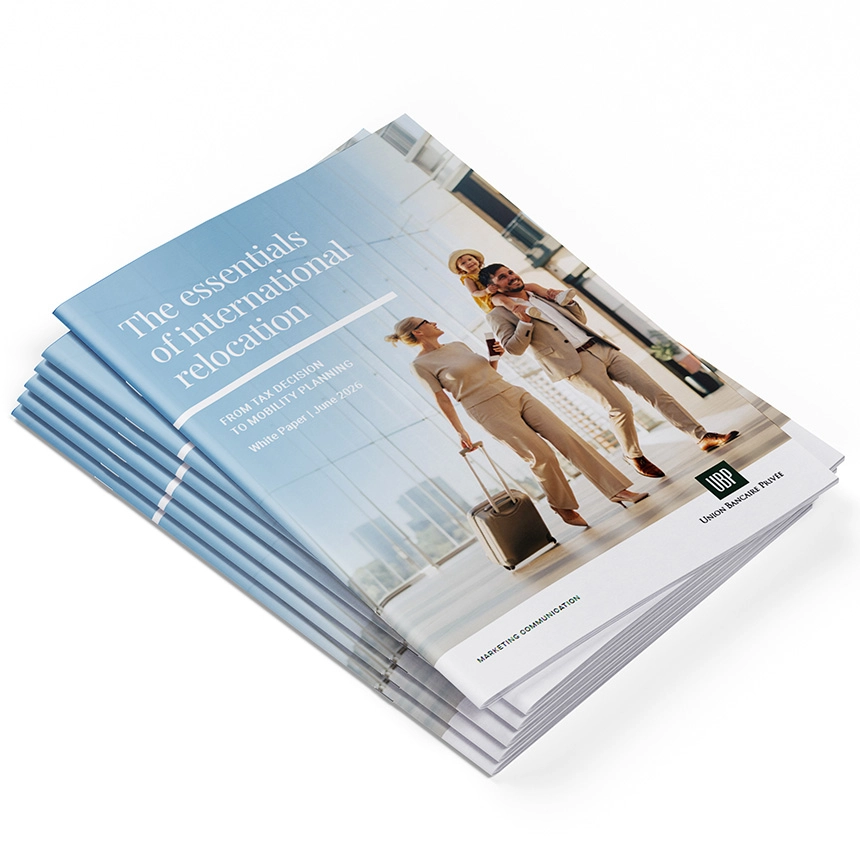
Download our publication:
The essentials of international relocation in the UAE
A practical guide for individuals and families planning a move to the UAE.
Why do you believe the UAE’s long-term position as a global wealth-planning hub remains strong?
The UAE’s position was built on its ability to provide a safe and secure environment, even within a region that can carry geopolitical risk. Its tax neutrality, legal depth and financial infrastructure remain firmly in place.
DIFC’s 2025 results recorded 1,289 family-related entities, up 61 per cent year on year, and 1,115 foundations, up 66 per cent. Henley & Partners also recorded a net inflow of 9,800 high-net-worth individuals in 2025, the highest globally. These are due to structural strengths that a conflict that lasted several months did not dismantle in the long-term.
How have recent legal reforms strengthened the UAE’s offering for expatriate and internationally mobile families?
Recent reforms have strengthened the UAE’s position for expatriate families, particularly around wills, succession and the enforceability of cross-border arrangements. Combined with the foundation regimes available through DIFC, ADGM and RAK ICC, the UAE now offers more than a tax-efficient base. It provides a comprehensive framework for succession, governance and continuity.
Are GCC families adequately prepared for the coming transfer of wealth?
Nearly $2tn is expected to pass to the next generation across the GCC over the coming decade, but many families still lack the formal structures required to manage that transfer without dispute or delay. The necessary tools already exist. The question is whether families are using them. Succession plans must be documented rather than merely discussed, and ownership structures must be capable of operating effectively under pressure.
What practical steps should families take now?
For most internationally mobile families, the priority is not to reconsider whether the UAE remains a suitable long-term base. The priority is to ensure the structures established here are genuinely fit for purpose.
That means documenting succession plans, maintaining genuinely accessible liquidity and ensuring ownership structures can withstand stress, including rapid cross-border capital movements. Families should also regularly test their contingency plans rather than assuming they will work when needed.
Why has access to liquidity become such an important priority for family offices?
Liquidity is not simply a portfolio detail; it is a form of strategic protection. According to the 2025 RBC and Campden Wealth Family Office Report, improving liquidity is the primary investment objective for 48 per cent of family offices globally, ahead of returns. De-risking portfolios ranks second at 33 per cent.
Some families have discovered that their capital could not move as freely as expected because of banking disruption or counterparty delays, and potentially airspace closures. Unfortunately, they learned this at the worst possible time.
Beyond investments and legal structures, what personal considerations should be incorporated into a family’s wealth plan?
Periods of acute uncertainty bring wider family priorities into focus, including where children are educated, which passports offer the necessary mobility and how quickly a family member in another country can access support.
For internationally mobile families, these are not secondary considerations. They are part of wealth planning. Strong plans reflect how families actually live today, rather than how they lived when their structures were first established; furthermore, these plans should be flexible enough to adapt to future unpredictable events
What is the main lesson internationally mobile families should take from the past crisis?
The recent events have not changed the fundamental reasons why the UAE remains one of the strongest options for internationally mobile families. It has changed the cost of relying on those strengths without completing the necessary planning behind them.
Uncertainty is not a reason to abandon a well-chosen base. It is a test of whether the planning surrounding it was ever sufficiently robust. The families navigating this period best are those that prepared in advance and established structures flexible enough to adapt to changing circumstances.