What does the future hold for Swiss asset management? Nicolas Faller, UBP's Co-CEO Asset Management, highlights the importance of specialisation, strategic acquisitions, and embracing AI to stay ahead in a competitive market.
You are Co-CEO of Asset Management. How do you share responsibilities with Co-CEO Michaël Lok?
We take all the important decisions concerning UBP’s Asset Management division together; at day-to-day level, Michaël is in charge of the investment teams and the house view, and I am in charge of sales, marketing and products.
UBP is one of the Swiss banks that is very active in consolidation and regularly makes acquisitions, primarily in wealth management. Why not in asset management too?
Asset management acquisitions are extremely complex operations and success ratios in the industry are challenging. When you merge two asset managers you must decide which investment team you want to keep for each asset class. Merging two teams with two different investment processes is a guarantee of failure and therefore of destroying value for clients. Also, those clients that have allocated their money to the team that is not retained would be tempted to sell their positions. Consultants in the asset management industry are fully aware of this sensitive process and often advise their clients to stay out of the firm before they have finalised their integration – and even afterwards – to make sure the new set-up is generating alpha. We are not against asset management acquisitions, but only if it gives us access to a new asset class that we are not active in, such as we did with small caps in Japan three years ago.
We are not against asset management acquisitions, but only if it gives us access to a new asset class that we are not active in, such as we did with small caps in Japan three years ago.
The industry is facing increasing margin pressure. Scaling and efficiency gains are commonly used countermeasures. How is UBP Asset Management dealing with margin pressure?
Margin pressure is here to stay, however, we have seen less additional pressure on real active management as long as alpha is produced. Our strategy has been the same for fifteen years: we like to concentrate on those investment capabilities that we manage extremely well. A lot of companies still try to do everything and therefore have to allocate capital to multiple investment centres. We have decided, for instance, that we won’t do US equities because the landscape is overcrowded; the case is the same for Asian equities.
Given major technological trends such as artificial intelligence and the use of blockchain, how high is the potential for efficiency gains in asset and fund management?
Research is the obvious area where we can extract value and productivity gains from AI. This also applies to marketing presentations and pitches, as well as to RFP’s. However, there is a flip side to these benefits: the industry used to recruit a lot of well-educated graduates to work in a given research area, which is a way to create a ‘nursery’ for future talent. Those jobs are disappearing which is forcing us to invent new training programmes.
Research is the obvious area where we can extract value and productivity gains from AI.
Given low interest rates, a strong Swiss franc and, most recently, a weakening US dollar, how have institutional investors' portfolios adapted to these developments?
First, it’s for a client to make the asset allocation decision to incorporate FX risk into their portfolios or not, and there are clearly a variety of cases. In Switzerland for instance, institutional clients are still investing heavily in real estate at the expense of fixed income because of low interest rates and the cost of hedging foreign currencies. Private credit is still an important asset class due to higher carry, and we see appetite coming back for emerging market fixed income – in both hard and local currencies – due to higher yields as well as the appreciation of local currencies against the US dollar.
The asset management industry is focusing heavily on private markets and wants to make this asset class accessible to a broader investor base. What is UBP's strategy in the private markets sector?
We believe that private markets will continue to gain ground in private clients’ portfolios; on average, 15–20% is probably a good allocation. Our approach is to favour diversification, and not only diversification of one asset class such as private equity, private credit, infrastructure and, of course, real estate, but also from a product standpoint. Evergreen is gaining a lot of ground and of course we have an open architecture offering, which is a good solution if it is sold properly. My view is to consider Evergreen as an illiquid product with flexibility in case a client is facing a special event, such as the purchase of real assets or making a donation. In other words, if clients are buying Evergreen because they want to trade due to market events, it is the wrong strategy. Next to Evergreen, we have partnerships that offer closed-end solutions, co-investments and of course some in-house products.
Given the expansion of this asset class, what is your forecast: will the higher risk and liquidity premiums remain attractive, or will there be a convergence with the more established asset classes?
The illiquidity premiums will persist and offer an upside versus liquid asset classes. Between 2% and 3 %, they are still extremely attractive, as people tend to forget that over the long term, fixed income’s average return is 4–5%, and listed equity’s is 7–8%.
How has the product portfolio in sustainability changed in recent years in view of the high regulatory pressure?
For European institutional clients, the SFDR has acted as a classification regulation, with a requirement for funds to be classified as Article 8 to ensure minimal sustainability safeguards. Regulation has had a positive effect in increasing extra-financial data availability, raising overall awareness and ensuring that asset managers are able to provide sustainable solutions.
Regulation has had a positive effect in increasing extra-financial data availability, raising overall awareness and ensuring that asset managers are able to provide sustainable solutions.
Current regulatory reviews and simplifications are welcome, but without alignment in the real economy, regulatory pressure risks undermining the shift to sustainability if it compromises performance.
Last, given the performance drivers of recent years (AI, oil, defence), Article 9 funds have been put under pressure. However, our long-term commitment to impact investing is intact. Our capabilities have grown, our teams are dedicated and enthusiastic, and some new ideas are on the table. We see increased benefits in specific segments of our European clientele, notably in the Benelux countries and the UK.
How will you picture the Swiss asset management industry in ten years' time?
Swiss asset management is well placed to remain a leading industry: on the one hand, wealth management clients are more and more sophisticated and are expecting alpha generation and robust portfolio construction using liquid assets, hedge funds and private market solutions; on the other hand, structurally low interest rates are pushing pension funds to look at further diversification, and Swiss asset managers are their natural partners for innovative solutions.
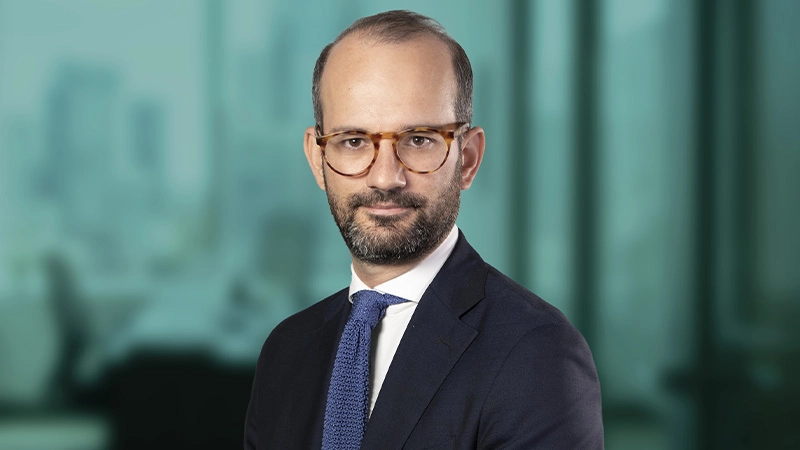
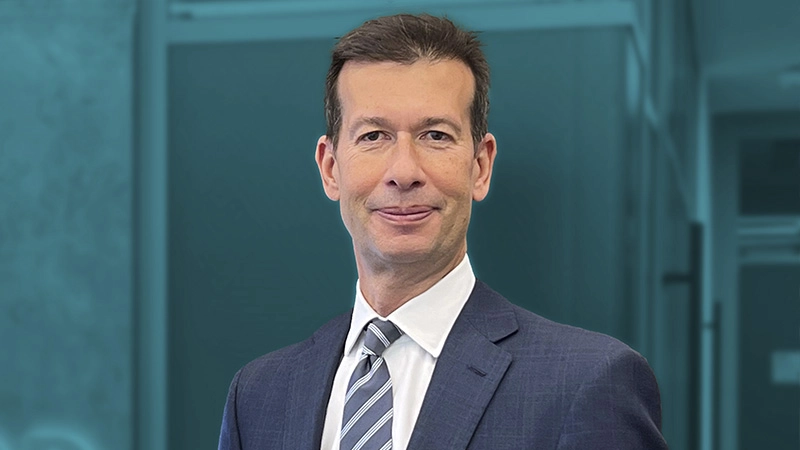
Nicolas Faller is Co-CEO of the Asset Management division and has been a member of the Executive Committee since 2015. He joined UBP in 2010 as Head of Sales Europe and was appointed Head of Global Sales in 2011 and Head of Institutional Clients in 2013. Prior to that, he was Global Head of Distribution Sales at BNP Paribas Investment Partners, after holding various management positions at Fortis Investments. Nicolas Faller is a graduate of the University of Mulhouse and the Ecole Supérieure de Gestion (France).
The views and opinions expressed by fund managers (internal or external) may differ from the house view. They are shared for informational purposes and do not constitute investment advice or a recommendation.


.webp)