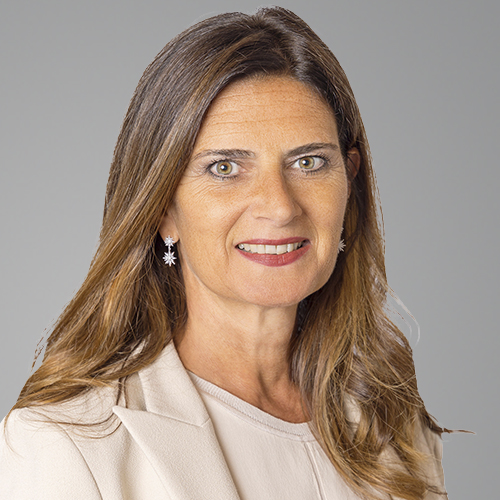
Nadège Lesueur-Pène, Head of Wealth Management Developing Markets & Europe at Union Bancaire Privée (UBP), explains what sets Swiss private banks – and UBP in particular – apart in an increasingly complex and competitive world.

What attracts businesses and investors to Switzerland?

There are many reasons why wealthy individuals choose to live in Switzerland and invest their assets there. With a long tradition of excellence in wealth management and the renowned expertise of its bankers serving an international clientele, Switzerland stands out for its economic stability. Stable GDP growth, controlled inflation, one of the lowest unemployment rates in the world, a significant trade surplus and a strong currency are just some of the cornerstones of the country’s attractiveness. Added to these are its long-standing political stability, a robust legal system and clear regulations, all of which are valuable assets in a world marked by uncertainty and geopolitical tensions. In this context, Switzerland is positioned as a safe haven, offering an ideal living environment in which to settle, raise children and plan for the future with peace of mind.

For decades, Switzerland has been a key player in the wealth management industry. Despite the significant challenges it has faced over the past two decades, or perhaps thanks to them, it has managed to maintain its leading position and strengthen its status as a global benchmark. While Asia is emerging as a new key player in international wealth management, Switzerland retains its position as a preferred destination for high-net-worth individuals, who are attracted by its stability, the recognised expertise of its bankers, and its exceptional living environment.

Whether in Switzerland or elsewhere, why use the services of a private bank?

The expectations of wealthy clients in terms of financial management are very different from those of retail customers. They often face complex situations and are looking for sophisticated solutions for managing their assets. Unlike ‘universal’ banks, private banks specialise in designing tailor-made solutions that are perfectly suited to each client's specific objectives. They offer a comprehensive and integrated approach, which includes investment advice, discretionary portfolio management, along with wealth and estate planning.

In addition to this comprehensive range of services, private bankers are also involved in the long-term, inter-generational management of wealth and, in some cases, family stewardship. This approach is based on a close and lasting relationship of trust, embodied by a dedicated manager who acts as a privileged point of contact, providing each client with personalised attention and in-depth expertise.

In your opinion, what are wealthy clients’ main expectations of a private bank today?

The services offered by a private bank consist primarily of preserving and growing a family’s wealth through an effective investment strategy. Clients are looking for privileged access to exclusive opportunities covering a wide range of asset classes.

Private banks also offer services to preserve and optimise assets through careful, personalised planning, as mentioned above. This is particularly important for families whose holdings are spread across several members and who are often based in different countries. Such situations require a thorough understanding of international wealth management, which not all institutions offer.

Beyond the benefits mentioned above, what factors should a high-net-worth client consider when choosing a private bank to manage their wealth?

In addition to seeking out an institution with an excellent reputation and solid financial foundations, clients must ensure that the bank they choose has the expertise and flexibility to meet their specific needs.

It is also essential to evaluate a bank’s value proposition: does it offer a truly personalised service, coverage of all asset classes and sufficient agility to adapt to changes in the client's personal situation and external contingencies? Last, aligning the interests and values of the client and the financial institution is a key lever for strengthening and sustaining the relationship.

What are the main challenges facing private banks today?

One of the main challenges facing private banks is the rapid development of client expectations. Today's clients are much more informed and demanding than in the past; they are looking for innovative solutions, transparent communication and round-the-clock availability. To meet these expectations, private banks must make significant investments in technology and talent development.

Greater regulation is undoubtedly another major focus. Private banks must comply with increasingly stringent regulatory requirements, which can be costly and complex. However, this can also be an opportunity, as clients value institutions that adhere to the highest standards of compliance and security.

Last, competition is fierce, not only between traditional private banks, but also from new market players such as fintechs and online banks. These new entrants often offer innovative solutions and lower fees, forcing private banks to rethink their business models and reinvent themselves to remain competitive.

What sets UBP apart from other private banks?

UBP is a Swiss private bank specialising in wealth and asset management. We have over CHF 170 billion in assets under management, making us one of the world's leading family-owned private banks. UBP is also one of the best-capitalised institutions in its sector and is recognised for its financial strength, which is a guarantee of security for clients who entrust their assets to us.

True to the founding principles of UBP, the Bank's investment value proposition is meticulously crafted by its dedicated research and portfolio management teams. With over 200 experts, its Investment Management division is committed to developing a thorough understanding of macroeconomic trends and market dynamics, identifying opportunities and managing risks across all asset classes. This expertise is then shared with our clients and tailored to their specific needs, through bespoke investment strategies built on our core convictions, advisory services, and actively managed investment solutions. We are dedicated to maintaining complete transparency in our investment approach, which is reflected in our publications which clearly communicate our decisions and outline the performance targets we set each year.

Last, although UBP is a bank with deep roots in Switzerland, it also operates a global network of more than 30 offices, including nine booking centres, in the major financial centres of Europe, the Middle East and Asia. Thanks to this international presence and the expertise of its teams, the Bank offers its clients global access to investment opportunities through a single point of entry. Its bespoke solutions – including multi-booking, multi-jurisdictional wealth planning, and mortgages for property acquisitions in different countries – are specifically tailored to the needs of wealthy families, whose increasing international mobility requires a flexible and personalised approach.

How does UBP respond to the evolving needs of UHNW clients?

UBP focuses on personalisation and innovation. We understand that each client is unique, with specific needs and objectives. That is why we invest first and foremost in our teams: to offer the best services and solutions, we need to attract the best talent.

We also leverage artificial intelligence in our processes, which allows us to simplify and automate certain tasks, thereby enhancing our operational efficiency. This innovative approach frees up valuable time for our bankers, allowing them to focus on what matters most: listening to our clients, understanding their needs and offering them tailored support.

We take a comprehensive approach to our clients’ wealth. We consider all the legal, tax and inheritance aspects specific to them, while considering their family structure. In collaboration with their own advisers (e.g. lawyers and notaries), our wealth planners help our clients develop a sustainable strategy to preserve and pass on their wealth by setting up the appropriate governance structures. We also train the next generation to ensure long-term planning. Our Family Office Solutions team takes this approach further by analysing family dynamics and identifying common values and objectives. Only after this analysis do we offer a review of financial investments, helping the family to define a vision aligned with its values, including through initiatives such as philanthropy. This tailor-made approach enables families to preserve, develop and pass on their wealth over the long term, while relying on our expertise to guide them.

Last, we are a family-owned business, which means that, as we are not listed on a stock exchange, we benefit from agility and independence that make us less vulnerable to adverse situations. It also means that our interests are aligned with those of our clients, as we fully understand what it means to run a family business and manage its assets.

About you personally: where did you start your career, how does your background relate to your current role, and how has it shaped your vision and approach?

From a very young age, I was fascinated by other cultures and ancient civilisations. This made me want to learn languages, starting with Latin, then German, Russian and Arabic, and not forgetting English, of course.

In addition to literature and history, I then became interested in political science, particularly Sovietology (one that no longer exists!). This naturally led me to travel to the Soviet Union during its decline: after obtaining my master's degree, I decided to learn about this region from the inside and live the experience to the full. So, I moved to Moscow, where I began my career in investment banking just as Russia was opening up to a market economy.

My work took me all over the region, from Central Europe to the Far East, visiting factories and mines to set up financing for entrepreneurs. It was a unique and enriching experience that allowed me to gain international experience that is still very useful to me today in my professional relationships. It made me aware of the challenges involved in creating, growing and sustaining industrial and financial assets, particularly in unstable economic and geopolitical conditions, and it also made me all the more aware of the importance of preserving wealth.

Last, what does wealth management mean to you, and what excites you about this profession?

Wealth management is not just about understanding a client from a financial perspective, but is above all about considering their environment, history and aspirations. Every client is unique, and it is therefore about finding the right solution for each situation.

And that's what fascinates me: listening to clients’ needs, establishing a privileged relationship to build trust, and then, based on these discussions, developing a wealth management strategy that fully meets their expectations and allows them to both grow and preserve their family assets.

For me, this profession is far more than just a career; it’s a deeply fulfilling journey of building close, long-term relationships with clients and their future generations. The rewards are truly mutual, as every family and their unique needs provide us with invaluable opportunities to grow and refine our wealth management expertise, driving us ever closer to excellence.