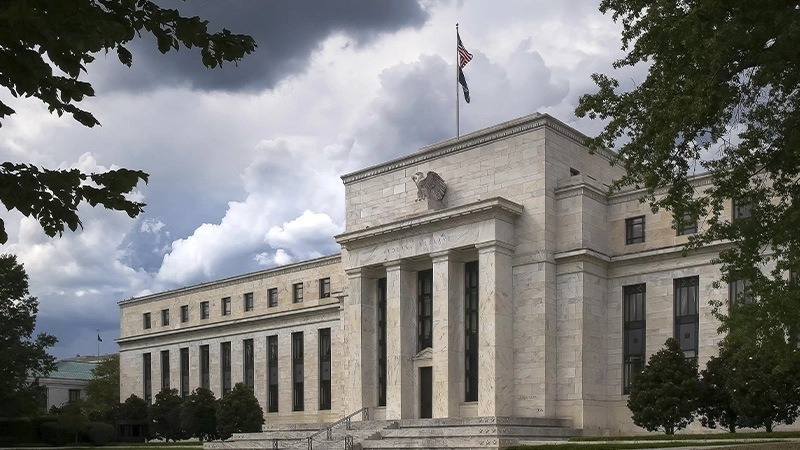
The markets are looking to the future, whilst central banks are looking to the past.
This criticism, whilst admittedly easy, is nonetheless justified: whilst oil prices are plummeting towards their lowest levels since February, the Fed and the ECB, have just tightened the screws. The contrast is striking. The truce remains fragile, and yet the price per barrel continues to fall. Meanwhile, the ECB has raised its key rate by 25 basis points to 2.25 per cent – its first increase since 2023. The Fed, on the other hand, has signalled via its ‘dot plot’ that half of its members now anticipate at least one rate hike by the end of the year. Alongside this, US inflation reached 4.2% in May – the highest level since April 2023 – whilst in the eurozone inflation hovered around 3.2%.
The story we’d like to tell ourselves is simple: oil prices are falling, so inflation will follow suit. However, this disinflationary narrative warrants some nuances on three points.
First, US consumers are stubbornly refusing to cut back. Buoyed by the wealth effect, income from the ‘One Big Beautiful Act’ (the Trump administration’s tax plan) and a robust labour market, US households continue to spend, despite accelerating inflation. More specifically, the price trend for ‘core’ services excluding housing – the barometer the Fed monitors very closely – is struggling to inspire confidence. Business surveys confirm this: firms are sticking to their plans to raise prices, both in the US and in the eurozone, despite the falling crude oil prices.
Then there is this paradox: whilst lower energy prices alleviate the growth-inflation dilemma associated with a supply shock, they simultaneously bolster household consumption. Less spending at the pump means greater purchasing power and higher demand. This gives businesses the opportunity to maintain, or even increase, their margins by raising their prices. In short, a widespread inflationary effect could extend well beyond sectors directly linked to energy.
There is still one argument that many would like to see come to fruition: artificial intelligence should, in the long run, boost productivity and exert downward pressure on prices. But at the moment, the opposite is happening. The rush for memory chips, combined with growing demand for electricity and increased demand for metals used to build data centres (primarily copper and steel), is driving inflation up, not down.
So yes, if one considers only the price per barrel, central banks may appear to be swimming against the tide. The fundamentals, however, justify keeping a foot on the brake. Therefore, the real question is no longer whether the truce will hold, but whether, even if it does, central banks will have the means to ease off the brake whilst consumption remains robust, and whilst artificial intelligence is, for the time being, fuelling inflation rather than combating it.
The opinions expressed herein are correct as at 2 July 2026 and are subject to change without notice. Any forecast, projection or target, where provided, is indicative only and is not guaranteed in any way.