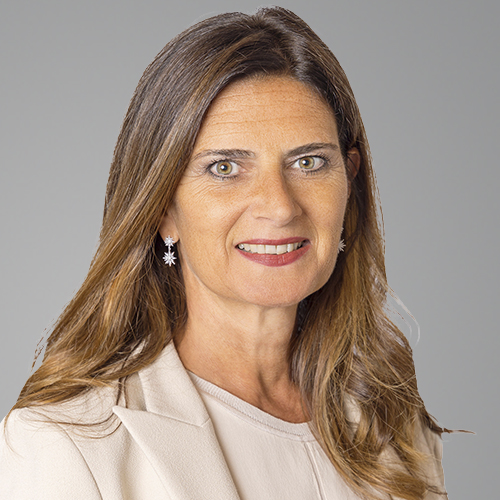
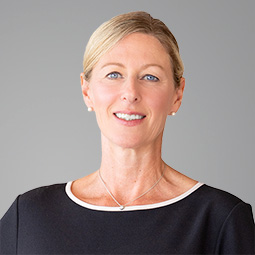
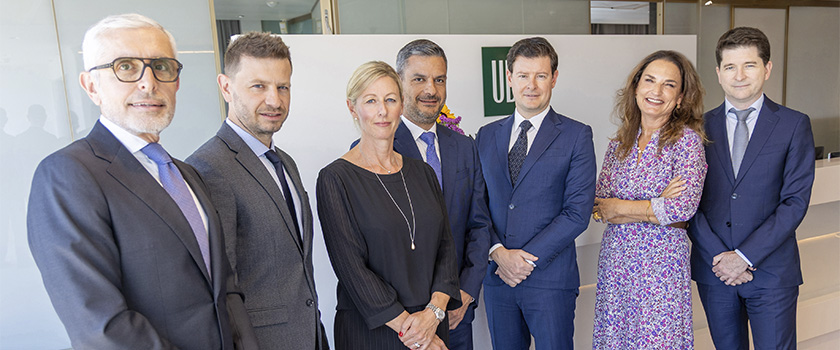
For external asset managers (EAMs), succession planning is a strategic priority. Demographic changes, rising client expectations, increasing regulatory complexity, and the need to attract younger talent are all reshaping the sector. In this piece, Union Bancaire Privée’s (UBP) Nadège Lesueur-Pène, Head of Wealth Management Developing Markets & Europe, and Anja Karcher, Head of EAMs Basel, provide some guidance on how to achieve a smooth handover.
Why is succession planning essential for EAMs?
Many EAM firms are built around the reputation and relationships of one founder or a small group of senior partners. This can create key-person dependency and leave the business vulnerable if one of them leaves unexpectedly. A well-designed succession plan protects client relationships, supports business continuity, and makes the firm more resilient.
The issue becomes particularly relevant as many business owners approach retirement. Clients, counterparties, and regulators increasingly expect firms to demonstrate institutional continuity. Succession planning can also support long-term growth by helping EAMs attract and retain younger professionals who want to see a credible path towards greater responsibility and ownership.
It sounds like it is a very important part of managing such a business. Why is succession often overlooked, and what risks can arise from neglecting it?
Succession can feel personal, particularly in an owner-led firm. For a founder, the business may represent decades of work, professional identity, and close client relationships. Discussing retirement or a reduced role can therefore be uncomfortable. Day-to-day client work and business development also tend to take priority over a process whose benefits may appear several years away.
The risks of postponement can be significant. An abrupt handover may unsettle clients and lead to the loss of important relationships. Employees may become uncertain about their future, while partners may disagree about the firm’s direction, which can create internal conflict and destroy value.
In that case, when should planning begin, and what are the first steps?
Where possible, planning should begin at least 3–5 years before an expected transition. This allows time to identify potential successors, develop their capabilities, introduce them to clients, and adjust the plan if circumstances change.
The first steps are practical: mapping the business’s structure and client profiles in order to identify areas where the business would be exposed if a senior individual were suddenly unavailable.
Partners and senior employees should discuss possible scenarios openly. The preferred outcome might be an internal transfer, a partnership arrangement, a sale to another firm, or a combination of these approaches.
A long-term succession plan should also be complemented by an emergency plan. Long-term succession addresses an expected transition, while a contingency plan prepares the firm for unexpected illness, death, incapacity, or the departure of a key employee.
And once it is under way, how long should a transition last, and what are the stages?
There is no universal timetable. The duration depends on client complexity, relationship depth, and the successor’s experience. In many cases, a structured transition of 12–24 months can provide continuity, although more complex relationships may require longer.
The transition is typically divided into phases – the first in which the successor observes, the second where they collaborate, and the third where they take the lead with the senior partner moving into a supporting or advisory role.
The successor should gain both information and judgement, learning how to handle difficult or sensitive situations while being given the space to build an authentic relationship rather than simply copy the senior partner.
The interests of the firm are obvious here, but does the client base play a role, and if so in what way?
The client base should be analysed in detail. Their age range, the jurisdictions in which they live, and the level of complexity of their structures can all have a bearing. An important part of a smooth transition is paying due attention to the heirs of the clients too, making sure the EAM’s successor nurtures relationships with the future owners of their clients’ wealth – the next generation.
Above all, clients want confidence that their interests and personal circumstances remain understood. Performance remains relevant, but it is rarely sufficient on its own to preserve trust. Transparency, accessibility, confidentiality, and confidence in the broader team are also critical in this regard. Communication with clients and employees should begin early and remain clear and consistent.
What are the most common pitfalls when handing over client relationships?
The most common mistake is treating the handover as a single event, as trust in the successor is built gradually.
Introducing the successor too late, which may make the client feel that the change is being imposed, is therefore another frequent problem.
Technical expertise alone will not automatically create trust: the successor needs to understand the client’s personal history, including their preferences, family circumstances, communication style, and informal expectations.
It is equally important to agree who retains responsibility during the transition. Ambiguity can lead to duplicated communication, missed decisions, or the impression that nobody is fully accountable.
That is for the operational side. What financial and valuation considerations should be addressed?
The value of an EAM depends as much on the transferability and quality of assets under management as on the amount. The age structure of the client base should be considered, as should the extent to which clients identify with the founder rather than with the wider organisation.
The transaction itself also requires careful planning. How will it be financed? Will the seller receive a lump sum, deferred payments, or an earn-out linked to client or revenue retention? Can the successor acquire an economic interest without creating excessive financial pressure?
As regards the workforce, how can EAMs attract and retain the next generation?
A credible succession model must give talented employees a reason to stay. Leadership development should be supported by a meaningful economic and governance framework. Depending on the firm’s structure, this may include equity participation, profit-sharing, deferred compensation, or governance rights. Training for career progression should also be provided, as the opportunity to help shape the future of the business can be a powerful incentive.
To conclude, how can UBP support EAMs on their journey?
Through its dedicated EAM desk, UBP provides independent asset managers with a wide range of services and facilities. This includes access to our wealth planning specialists who can help design and implement the succession architecture, covering such aspects as ownership, tax, and cross-border considerations. Meanwhile, our Family Office Solutions department and its innovative proprietary approach can help make the transition workable for the owning family by aligning stakeholders and establishing governance.
We also add value through our partnership with the Swiss Association of Wealth Managers (VSV-ASG), a network of skilled professionals defending the interests of and providing invaluable resources and knowledge-sharing to independent asset managers.
As a family-owned business with a long-term view, UBP has a clear understanding of what it takes to establish a lasting legacy. Our support can allow you as an EAM to navigate your succession smoothly, preserving your entrepreneurial identity while focusing on the relationships at the heart of your business. Get in touch to discuss how we can be of service to you.
This article is for information purposes only and does not constitute legal, tax, investment, or other professional advice. The availability of services and solutions is subject to applicable laws, regulations, and eligibility requirements.